


Hair loss treatment in Singapore is widely sought after by both men and women, but the causes, patterns, and effectiveness of treatments differ significantly. Men typically experience male pattern baldness, leading to receding hairlines and bald spots, while women often notice general thinning across the scalp. These differences mean that not all treatments work the same way for both genders.
Understanding the root causes and choosing gender-specific solutions—whether medications, non-invasive therapies, or surgical options—can lead to better results. By selecting the right treatment approach, individuals can effectively address their hair loss concerns and improve long-term hair health.
This guide explores how hair loss manifests differently in men and women, the underlying causes, and the most effective treatment options available for each.
How Hair Loss Differs Between Men and Women
Although hair loss can occur in both genders, the way it progresses varies. Recognizing these differences can help in selecting targeted treatment strategies.

Male Hair Loss Patterns
Men primarily experience androgenetic alopecia, commonly known as male pattern baldness. This condition is genetic and progresses in distinct patterns:
- Receding Hairline – Hair begins to thin at the temples, creating an M-shaped hairline.
- Crown Balding – Thinning at the crown can expand into a larger bald spot over time.
- Complete Baldness – In advanced cases, hair loss progresses to near-total baldness, except for the sides and back.
Female Hair Loss Patterns
Women, on the other hand, experience a more diffuse form of hair loss that rarely leads to complete baldness:
- Widespread Thinning – Hair gradually thins across the scalp rather than forming distinct bald spots.
- Widening Part – Many women notice their hair part widening as the density decreases.
- Excessive Shedding – Stress, hormonal fluctuations, or underlying medical conditions can trigger sudden and severe hair shedding.
Common Causes of Hair Loss in Men and Women
Hair loss is caused by a combination of genetic, hormonal, and environmental factors. However, certain causes are more prevalent in one gender than the other.
Causes of Hair Loss in Men
- Genetics – Male pattern baldness is hereditary and influenced by the hormone dihydrotestosterone (DHT), which shrinks hair follicles over time.
- Hormonal Changes – High levels of DHT contribute to follicle miniaturization, leading to permanent hair loss.
- Lifestyle Factors – Smoking, poor diet, and high stress levels can accelerate hair thinning.
- Medical Conditions – Certain illnesses, such as thyroid disorders and scalp infections, can trigger hair loss.
Causes of Hair Loss in Women
- Hormonal Imbalances – Pregnancy, menopause, and polycystic ovary syndrome (PCOS) can lead to female pattern hair loss.
- Nutritional Deficiencies – Low iron, vitamin D, and protein intake can weaken hair follicles.
- Medical Conditions – Autoimmune diseases like alopecia areata and thyroid disorders can contribute to excessive shedding.
- Stress and Lifestyle – Emotional stress, hairstyling habits, and harsh chemical treatments can lead to temporary or long-term hair thinning.
Best Hair Loss Treatments for Men
Men have access to a variety of hair restoration solutions, ranging from medical treatments to surgical procedures. The right treatment depends on the severity of hair loss and long-term goals.
1. Medications (Minoxidil & Finasteride)
- Minoxidil (Regaine/Rogaine) – A topical solution that stimulates blood circulation to the scalp, promoting hair growth.
- Finasteride (Propecia) – An oral medication that reduces DHT levels, slowing hair loss progression.
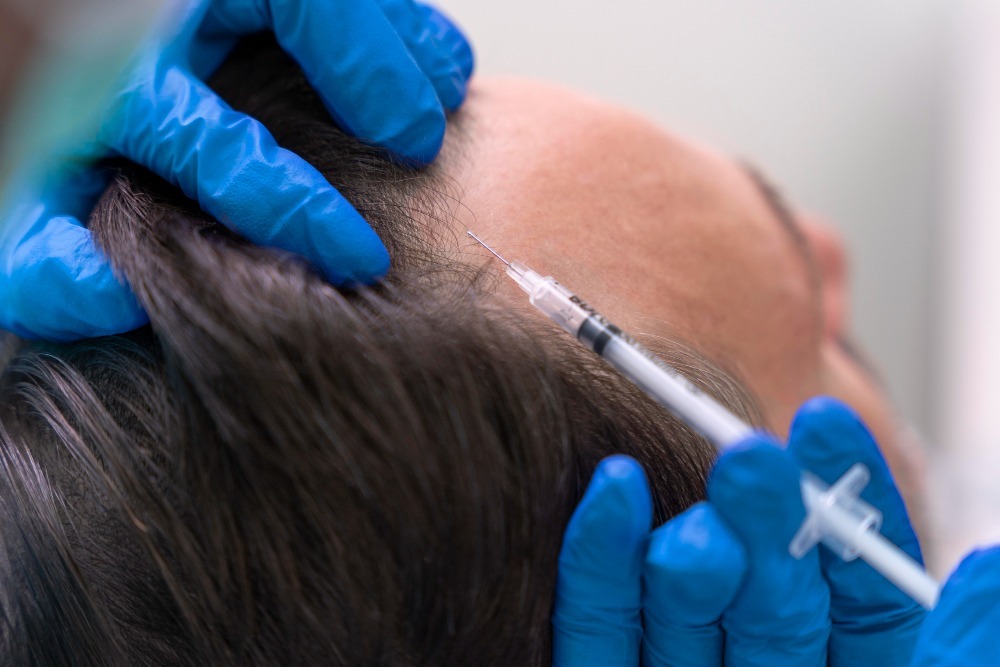
2. PRP (Platelet-Rich Plasma) Therapy
- Uses platelet-rich plasma from the patient’s blood to boost follicle regeneration.
- Suitable for early-stage hair thinning and improving overall scalp health.
Suitable for early-stage hair thinning and improving overall scalp health. Those weighing their options between PRP and surgical procedures can explore the differences between PRP and hair transplants to determine the most suitable approach.
3. Hair Transplants (FUE & FUT)
- Follicular Unit Extraction (FUE) – Individual follicles are extracted and implanted in balding areas.
- Follicular Unit Transplantation (FUT) – A strip of the scalp is removed, and follicles are transplanted.
4. Low-Level Laser Therapy (LLLT)
- A non-invasive treatment that enhances blood circulation and strengthens weak follicles.
- Available in clinics and home-use laser caps.
Best Hair Loss Treatments for Women
Women require treatments that address hormonal fluctuations and scalp health while minimizing side effects.
1. Topical Treatments (Minoxidil & Hair Serums)
- Minoxidil 2% – FDA-approved for female hair loss, promoting regrowth and reducing thinning.
- Medical-grade serums – Boost scalp nourishment and strengthen hair follicles.
2. Hormonal Therapy
- For women with PCOS or menopause-related hair loss, hormone-balancing medications can help regulate hair growth.
3. PRP Therapy
- Improves scalp circulation and restores hair density, especially for stress-induced shedding.
4. Scalp Micropigmentation (SMP)
- A non-invasive cosmetic tattooing procedure that creates the illusion of thicker hair.
Key Differences in Hair Loss Treatments for Men and Women
While some hair loss treatments are effective for both genders, the approach varies due to biological and hormonal differences:
- Medication Use – Finasteride, a common treatment for male pattern baldness, is not typically prescribed to women due to risks during pregnancy and hormonal side effects. Instead, women are often recommended Minoxidil or alternative topical solutions.
- Hair Transplants – More commonly performed on men, as their hair loss tends to follow predictable patterns, making it easier to extract and implant grafts. In contrast, female pattern hair loss is usually more diffuse, reducing the effectiveness of transplants.
- Hormonal Considerations – Women experiencing hair loss often require treatments that regulate hormone imbalances, such as anti-androgen medications or birth control pills, while men typically focus on blocking DHT, the hormone responsible for male pattern baldness.
- Scalp Treatment Preferences – Women are more likely to incorporate scalp rejuvenation treatments like PRP therapy and laser therapy, which help improve hair density without invasive procedures.
Choosing the Right Hair Loss Treatment
The best hair loss treatment depends on your hair loss stage, budget, and long-term goals. If you’re unsure which treatment suits you best, consulting a specialist can help tailor a plan for optimal results.
Conclusion
Understanding the differences in male and female hair loss patterns is crucial when choosing the right hair loss treatment. While men often require DHT-blocking solutions like Finasteride and hair transplants, women benefit more from hormonal therapy, Minoxidil, and PRP therapy. Regardless of gender, early intervention and the right treatment plan can significantly improve hair density and slow down hair loss progression.


